Author:
Dan Adlešič
Collaborators:
Matthew Schwarzkopf, professor & research counsellor, InnoRenew CoE, University of Primorska
Olga Srejić, research assistant and PhD candidate, InnoRenew CoE, University of Primorska
Špela Vrtovec, research assistant and PhD candidate, InnoRenew CoE, University of Primorska
Acid Patina explores a form of chemical painting on wood, using acids and alkalis to develop a corroded plywood surface with deepened wood tones and organic ornaments, which is then used to make a series of lamps. In collaboration with InnoRenew CoE, the project also explores translucent wood veneer with uneven transparency, used as a light diffuser, extending the idea of patina from color to light.
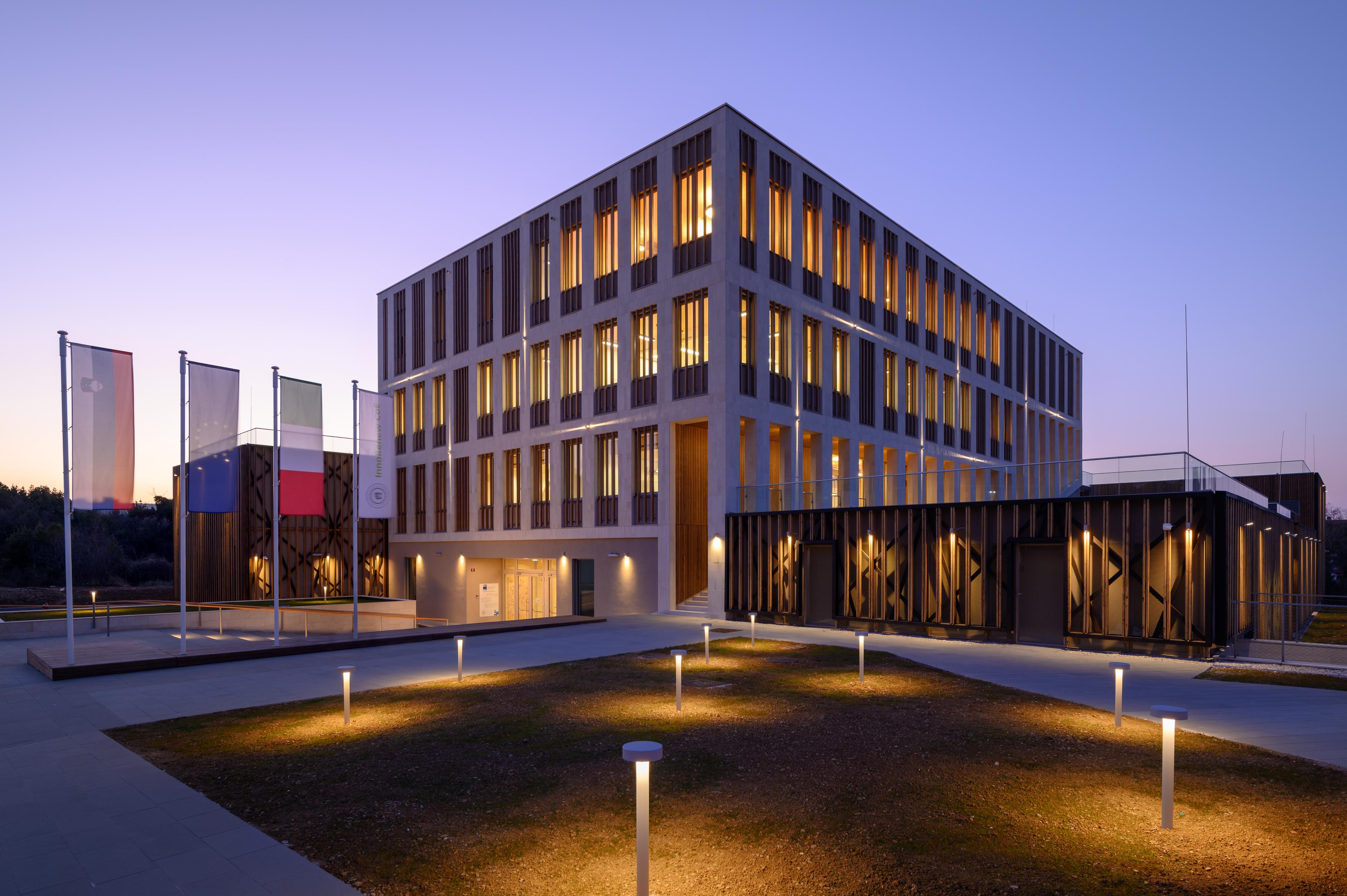
InnoRenew CoE is an independent department within the UP Institute Andrej Marušič whose research targets renewable materials and sustainable buildings, specifically innovative approaches to wood and its use, with the goal of transferring scientific knowledge into industrial practice.
Photo: Dan Adlešič
Acid Patina started from my observation of old, worn-out wooden and paper objects, sun-burned, stained, watermarked, oxidized – patinated. I like how these irregularities give objects warmth and character. I wanted to bring some of these qualities into new objects, not by imitating them, but by finding a process that doesn't feel fake. A process that I can control and use as a form of expression.
Through a series of experiments, I started exploring a form of chemical painting using acids and alkalis rather than paint or stains. The chemicals react with the wood's components, creating deepened wood tones, bleached areas and unexpected patterns. Applied freely, almost like drawing, the liquids spread along the wood grain, altering the composition of the wood and creating organic shapes and colors that change depending on the chemical sequence, viscosity and exposure time. The result is a corroded surface with organic ornaments, somewhere between a painting and a piece of abandoned plywood.
In collaboration with InnoRenew CoE, we used a process called delignification to develop translucent wood veneer that acts as a light diffuser. The idea was to create an uneven, mottled transparency, allowing different amounts of light to pass through different areas of the wood, extending the idea of patina from color to light.
The final lamps are improvised compositions of cut-out plywood and translucent veneer, with shapes that balance the acid patina rather than follow a fixed design.
Photo: Dan Adlešič