Authors:
Gaia D'Arrigo in Rebecca Schedler
Collaborators:
Bioreactors: In collaboration with Bibi Smith
Research advisor and project facilitator: Maja Bjelica - Research Associate at the Science and Research Centre Koper
Research advisor: Dr. Jerneja Penca - Science and Research Centre Koper, Head of Mediterranean Institute for Environmental Studies
Research advisor: Neli Glavaš - Chester at SOLINE
Technical Sponsor and Support: SOLINE Pridelava soli d. o. o.
Supported by Craft voucher - Mondriaan fonds and Talent Development - Stimulating fonds
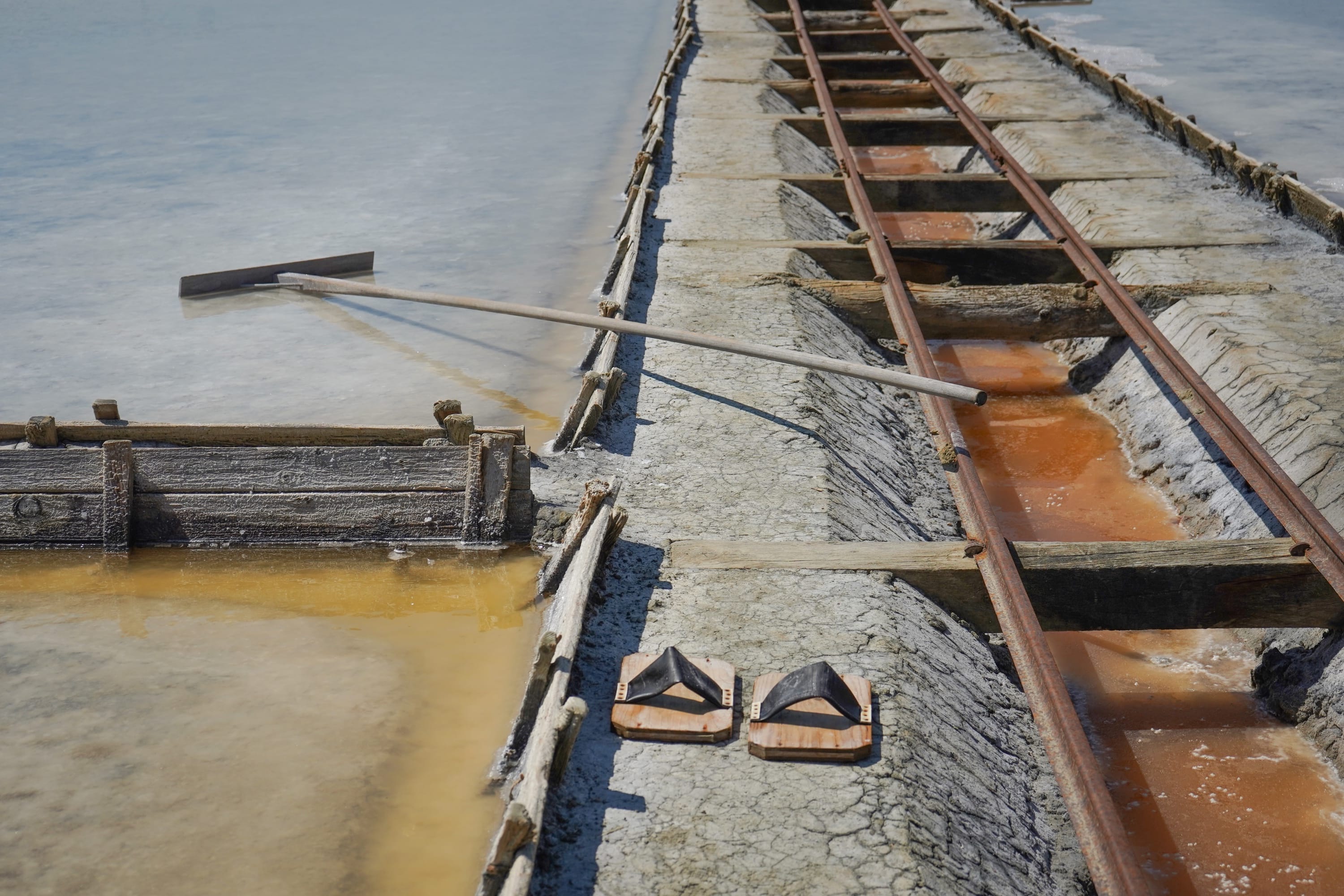
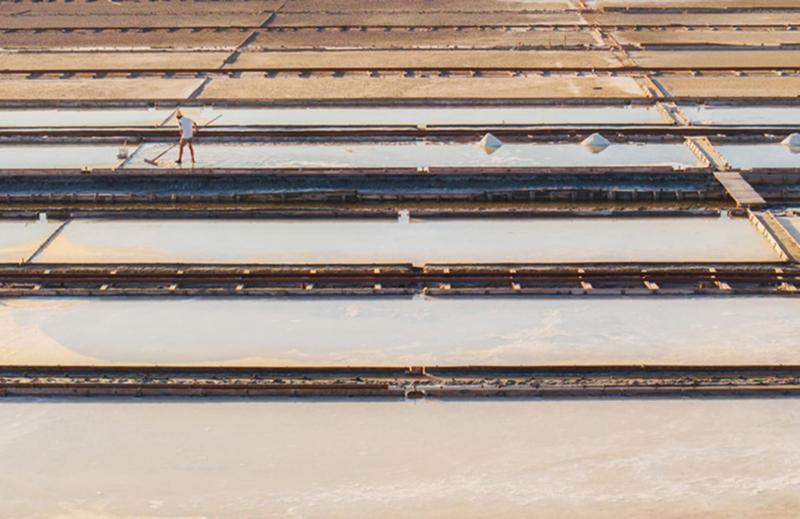
In the Sečovlje saltpans, salt production depends on a delicate balance between humans, water, minerals and microorganisms. At the heart of this system lies petola, a thin living layer at the bottom of the salt crystallisation pans that enables the production of high-quality salt. Its formation and survival depend on continuous maintenance and the careful regulation of water flows. Developed by Gaia D’Arrigo and Rebecca Schedler, Petola: Living Heritage within the Saltworks explores the saltpans as a living, interconnected system in which natural processes and human labour are inseparable. Through the study of organisms collected from damaged petola, experiments in their cultivation and an exploration of traditional salt-making tools, the project asks how heritage might be preserved not simply as a trace of the past, but as a living practice of maintenance, adaptation and coexistence.
A company that preserves centuries-old salt-harvesting heritage and its cultural landscape within the Sečovlje Salina Landscape Park using traditional, manual methods.
The leading research institution in the Primorska region, conducting interdisciplinary research across humanities, social sciences, and natural sciences with a focus on the Mediterranean and integration into the international scientific community.
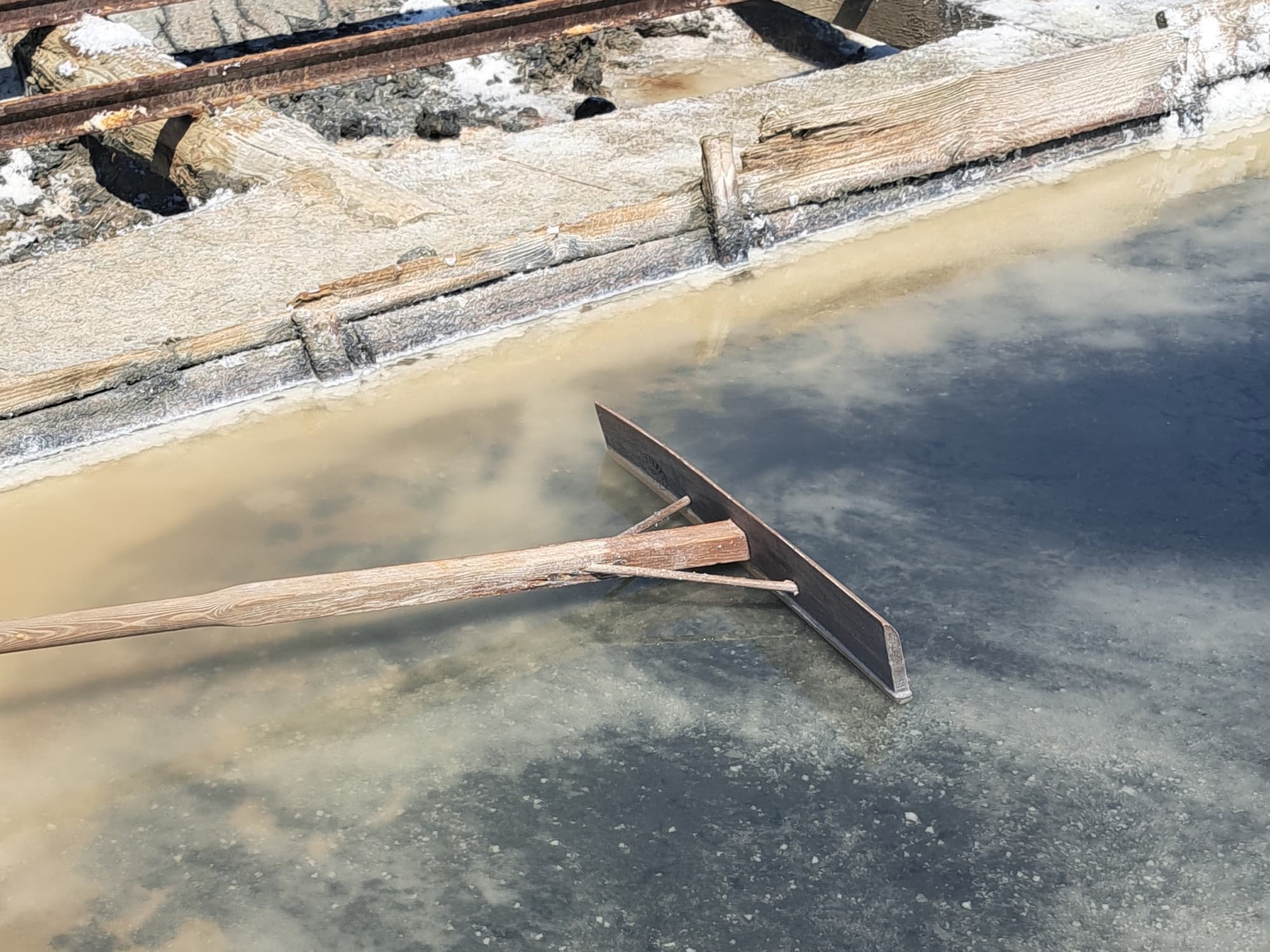
Photo: Gaia D'Arrigo, Rebecca Schedler
The current governance framework for the saltwork entrenches a number of dichotomies, including those between nature and culture, production and conservation, and extraction and restoration. In doing so, it obscures the inherent balance and forms of cohabitation that lie at the heart of salt-working as a practice. Yet salt-working itself offers an inspiration for a form of “coexistence governance” (Jerneja Penca, Matjaž Kljun), grounded in symbiosis.
Salt-working is an activity being built up from a collaboration among humans and the rest of nature, among the environment and its inhabitants. It envelopes technical knowledge of working-with a saltwork, usually transmitted through generations, but always with an embodied, practiced, creative experience which brings it beyond a simple know-how, as it calls for presence, communication, cohabitation with the environment. In this sense, we understand salt-working as experiential environmental wisdom. (Maja Bjelica, Grain of Salt, Crystallising Cohabitation)
“Petola: Systemic Heritage within the Saltworks” looks at these interactions and considers the saltern of Sečovlje Salina as an interconnected landscape. The project focuses on petola, a cultivated microbial/mineral layer formed through the interaction of microorganisms, minerals, salt, and sediment. It creates a thin biological crust that separates salt crystals from the mud beneath, enabling the production of high-quality salt. Its formation depends on continuous maintenance, controlled water circulation, and ecological conditions, making it both a technical infrastructure and a living ecosystem.
Our project questions how preservation strategies and representations of heritage might move beyond conserving landscapes as static reproductions, instead supporting ongoing practices of constant reflection, maintenance and coexistence.
The centerpiece of the installation consists of five bioreactors, glass vessels hosting organisms originating from wounded and dried petola collected from the saltworks. The bioreactors are an exploration of whether these organisms can be cultivated and potentially contribute to the future revitalisation of abandoned parts of the saltworks. Instead of adopting a laboratory aesthetic, the bioreactors are conceived to evoke the saline as a metabolic system.
The installation contains the materiality of the site: salt containing traces of petola and six bochele, tools traditionally used to regulate water distribution into individual crystallisation pans. The bochele are made from saline clay, carrying the minerals, microorganisms, and memory of repeated evaporation and float cycles. The video documentation records the fieldwork at the saline, portraying the maintenance of the salt field and the collaborative interspecies labour between the salt workers, the materials, and the microorganisms.
Photo: Gaia D'Arrigo, Rebecca Schedler